
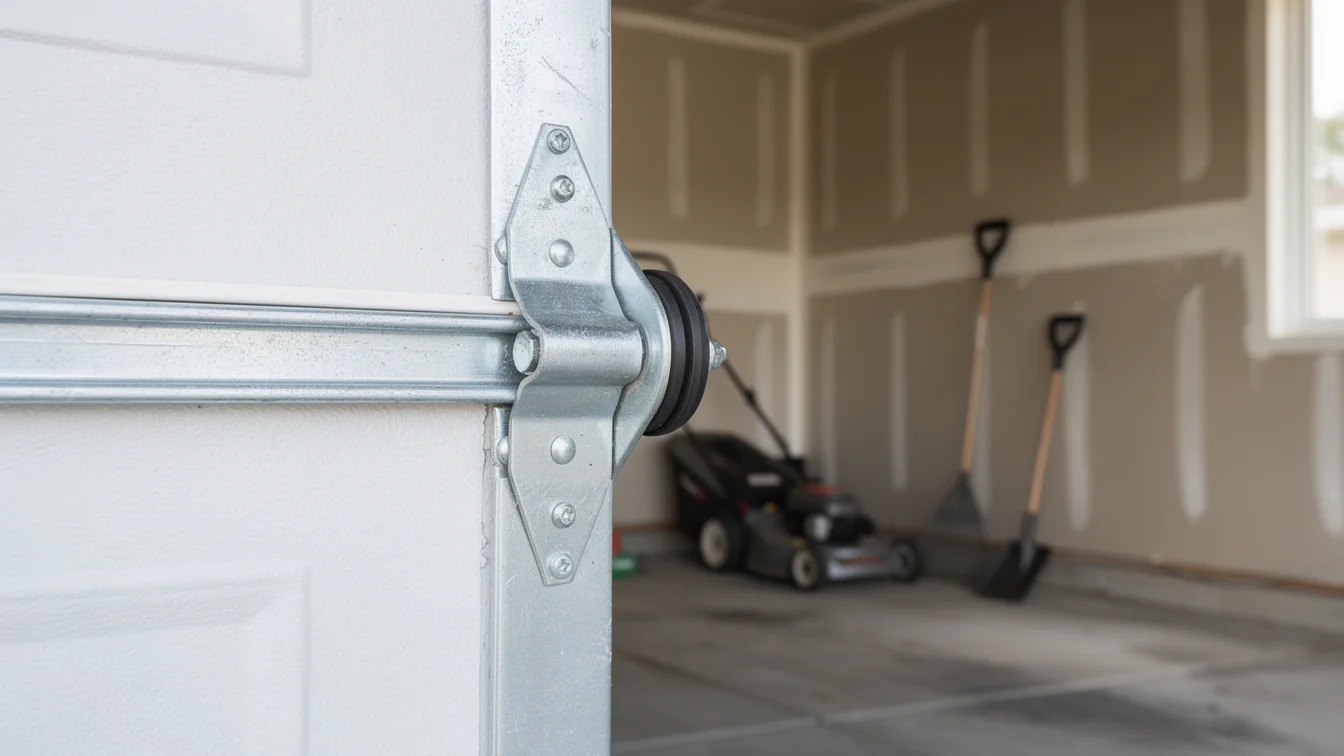
Why Your Garage Door Jumps the Track
Apple Valley homes built mostly in the 1960s-70s with original hardware and hard winters are the two reasons doors jump track here.
Read moreApple Valley homes built mostly in the 1960s-70s show really worn weather seals and draughts fast in Minnesota's cold winters. Here's what to check first.
Local detail
Most of the houses here went up between 1955 and 2004, with the bulk of the stock built out in the 1960s and 70s across Apple Valley's established neighborhoods. Doors from that era weren't built with today's foam-core weatherstripping in mind - the original bottom seals and side jambs were thinner, and decades of freeze-thaw cycles have left plenty of them cracked, flattened, or pulled loose from the track.
Across the service area there are roughly 112,625 households and about 50,541 owner-occupied houses, a lot of them sitting on the same mid-century framing. Median household income here runs around $97,784, which matters because it's usually cheaper to replace a full seal kit now than to let draughts push up heating bills every winter until the door itself needs attention.
The service area stretches from towns like Mendota Heights and Richfield out to Inver Grove Heights and Hastings, but the pattern repeats: 1960s and 70s construction, original seals, and a cold climate that doesn't forgive gaps.
The area
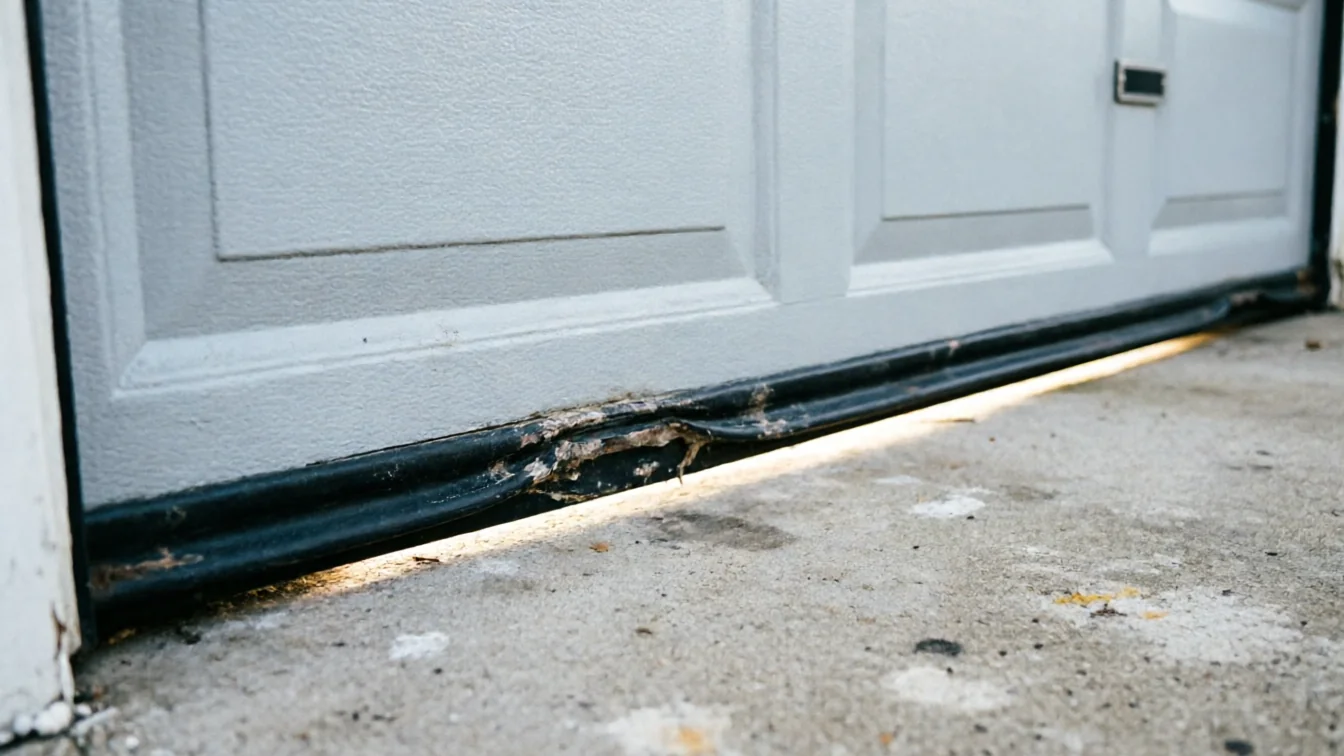
Start at the bottom. The rubber astragal that runs along the floor is the first thing to fail on a door this age - it hardens, splits down the middle, or shrinks away from the slab edge so you can see daylight under the corners. Press a flashlight against it from outside at night; if light shows through on the inside, the seal's done.
Next, check the side jambs and the top seal where the door meets the frame. On houses from the 1960s and 70s, these were often nailed wood strips rather than the vinyl-clad jamb seal used now, and wood that old has usually warped enough to leave a gap along one side even when the weatherstrip itself looks intact.
Last, run your hand along the panel seams on steel doors from that period. Older doors sometimes don't have the tight tongue-and-groove edge newer panels use, so even a perfect seal won't stop air moving between sections if the panels themselves have shifted.
What we find
If you've replaced the bottom seal and the draught is still there, the problem usually isn't the seal - it's the track or the slab underneath it. A door that's been pulling to one side for years can leave a gap no seal kit closes, and in that case you're looking at track alignment, not weatherstripping.
We don't do full frame rebuilds. If the wood jamb around the door has rotted out from years of trapped moisture behind a bad seal, that's carpentry work, not a seal swap, and we'll tell you that straight rather than patch over it.
Call when you've done the obvious check - new bottom seal, new side strip - and cold air is still coming through, or when the door visibly sits unevenly in its opening. That's usually a sign the track or the slab has moved enough that no amount of weatherstripping fixes it on its own.
How we work
This area sits in a cold climate band, moderate by national standards but still enough to put seals through a real freeze-thaw cycle every winter. Rubber that's flexible in October gets brittle by January, and the gap it leaves lets in the kind of cold air that makes a garage feel ten degrees colder than it should.
On the older housing stock built through the 1960s and 70s, wood jambs expand and contract with humidity more than the vinyl-clad jambs used in newer construction, which means a seal that fit snug in summer can show daylight by midwinter even without any damage. That's not a defect - it's just what this housing stock does every year, and it's why seal checks matter more here than they would on a newer build.
Ice at the base of the door is the other piece. Snowmelt refreezing against a worn bottom seal pries it away from the slab faster than dry cold alone, so a seal that looks fine in November can be shot by February.
Questions
There's no fixed schedule, but on houses in this area built through the 1960s and 70s, check it every fall before the cold sets in. If it's cracked, flattened, or you can see daylight under the corners, replace it then rather than waiting for a January draught.
Often the seal is fine but the jamb behind it has warped, especially on older wood-framed openings common in this area's housing stock. A seal can look intact and still not meet the jamb tight enough to stop air movement.
Replacing a bottom seal or side weatherstrip is a reasonable DIY job. If you've done that and still feel cold air, the issue is usually track alignment or a settled slab, which is worth a call rather than another seal kit.
Recommendation
More garage door guides for Apple Valley homeowners.
Apple Valley homes built mostly in the 1960s-70s with original hardware and hard winters are the two reasons doors jump track here.
Read more
Apple Valley homes built mostly between 1955 and 2004 wear differently in cold Minnesota winters, and each noise your door makes points to a different cause.
Read more
Apple Valley homes built 1955-2004 often run openers without battery backup.
Read moreReady when you are
Apple Valley Garage Door Pros repairs and installs garage doors, springs and openers in Apple Valley, MN and the surrounding area.