
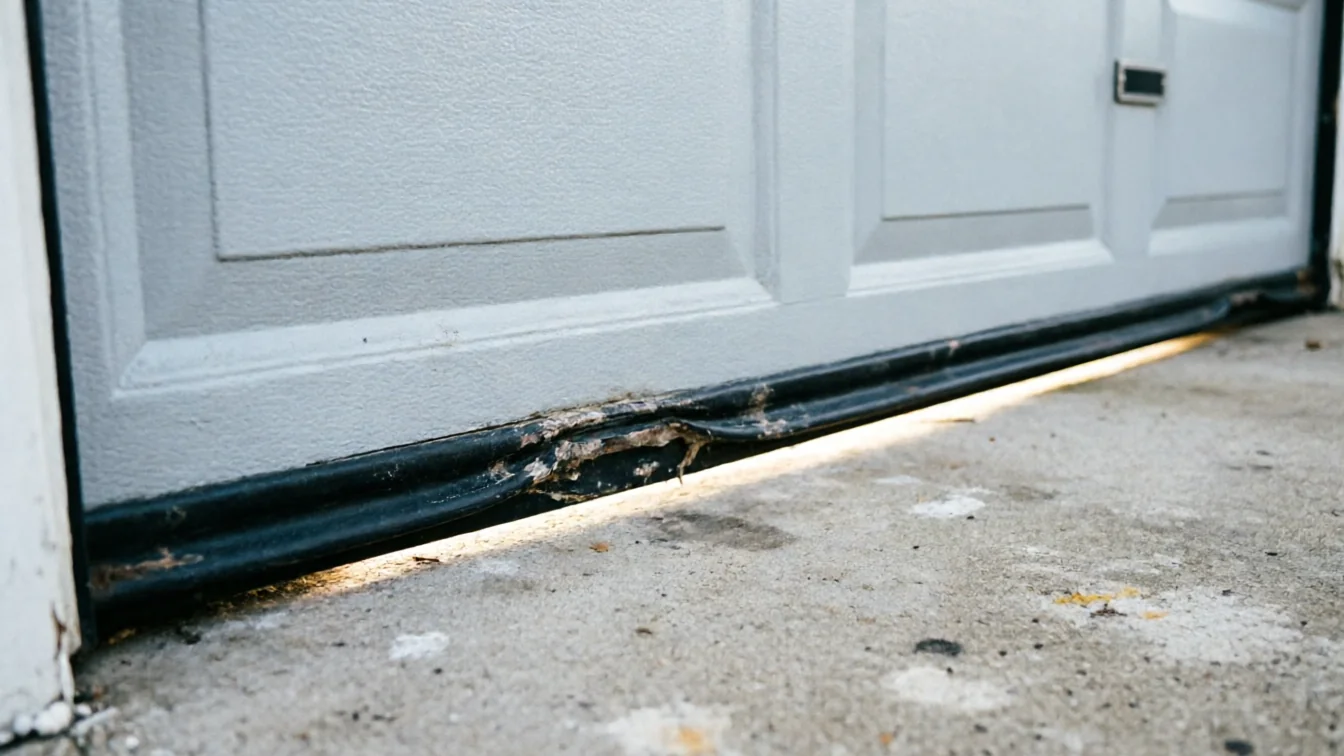
Weather Seals and Draughts: What Apple Valley Homes Need
Apple Valley homes built mostly in the 1960s-70s show really worn weather seals and draughts fast in Minnesota's cold winters.
Read moreApple Valley homes built 1955-2004 often run openers without battery backup. Here's what cold-climate power cuts do to that hardware and what to check first.
Local detail
Most houses on this side of the metro went up between 1955 and 2004, with the bulk of that stock dating to the 1960s and 70s. That matters more than people think when the power cuts out. A lot of these homes still carry original or first-replacement openers, chain-drive units built before battery backup was standard equipment. When the grid drops in a cold stretch, those openers just stop. No backup, no belt tension release, nothing - the door sits wherever it was when the lights went out, and if that's halfway up, you've got a gap into an unheated garage all night.
Newer openers sold in the last decade almost all include a battery backup that'll cycle the door a few times on its own. But in a service area where a good share of the houses are 50 to 70 years old, that feature simply isn't in a lot of garages yet. We see this pattern a lot on calls after a storm knocks the power out for a few hours - the opener comes back on with the grid, but the owner never knew the door was stuck closed or open in the meantime.
This isn't a defect. It's just what happens when 1970s-era hardware meets a modern power grid that still goes down in a cold snap.
The area
Cold is the other half of this. We're in a moderate-cold climate band here, and that means two things for an opener during a power cut. First, grease on the rail and the drive screw thickens when the garage drops near outdoor temperature, which is exactly what happens once the door's been stuck open or the heater's been off for a few hours - so the motor has to work harder the moment power comes back. Second, any battery backup unit loses capacity in the cold. A battery rated for a dozen cycles at room temperature might give you three or four in a cold garage, which is the gap that catches people off guard the night after a cut.
For houses built in the 1960s-70s window that makes up most of the stock here, garages were rarely insulated to begin with, so the opener and any backup battery sit at close to outdoor temperature most of the winter. If you're relying on a battery backup to get you through an outage, know that cold cuts its real-world performance well below the spec sheet number.
What we find
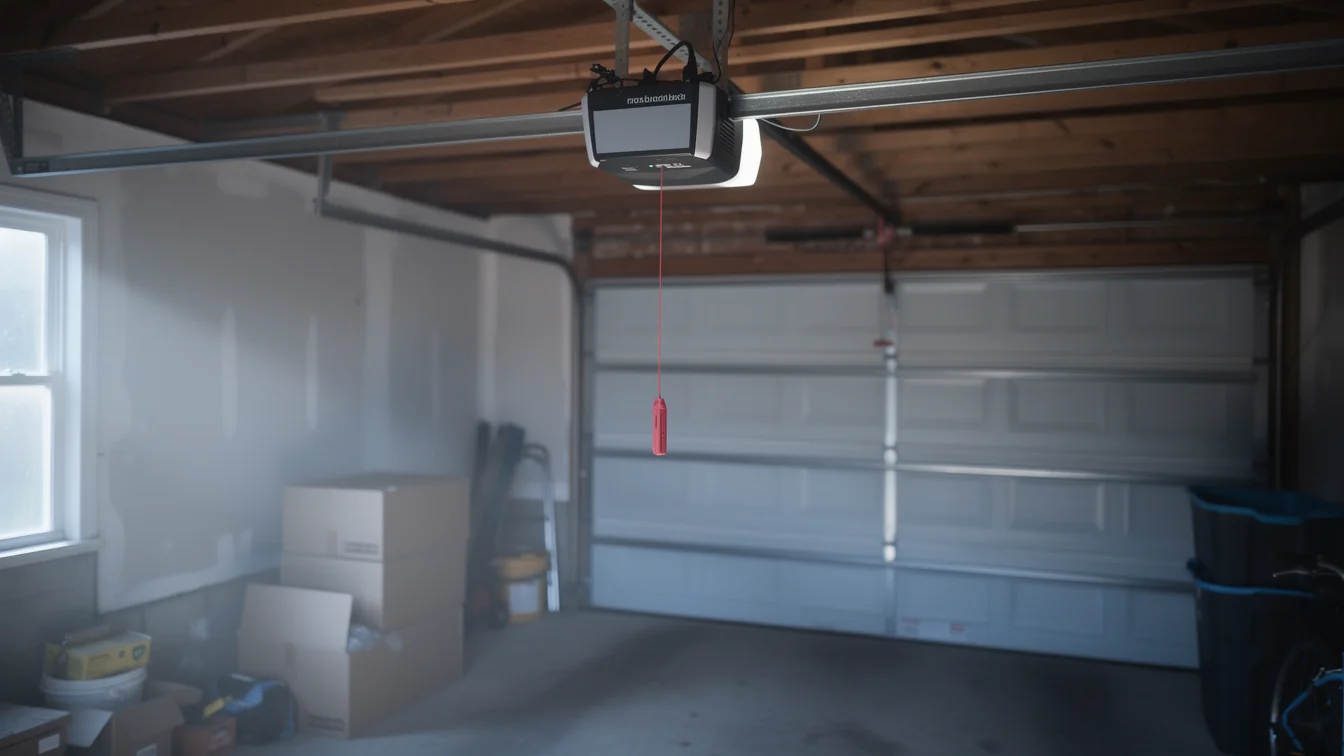
Before you call anyone, find the manual release cord - the red handle hanging from the trolley on the track. If you don't know where it is, that's the first thing to fix, because in a power cut it's the only way to move the door by hand. Pull it, and the door should lift with moderate effort. If it won't budge or feels like dead weight, that's a spring problem, not an opener problem, and pulling the release won't help.
Next, check whether your opener has a battery backup at all. Look at the motor housing for a slot or a small box wired into the unit. If your house is on the older end of that 1955-2004 build range and the opener looks original, there's a decent chance it predates backup batteries entirely.
If you do have a backup, check when it was last swapped. These batteries have a shelf life regardless of how often they're used, and a battery sitting unused in a cold garage degrades faster than one in a heated space. A quick way to test: unplug the opener for thirty seconds and see if the backup kicks in on its own.
How we work
Call if the manual release cord doesn't move the door by hand - that's spring tension, and it's not safe to force. Call if the opener runs but the door doesn't move, which usually means a stripped gear or a worn drive component, common once a unit's been through a few winters of cold-start cycling. Call if your battery backup won't hold a charge after a cut; swapping just the battery is usually a smaller job than replacing the whole opener.
One honest limitation: we don't carry every obsolete chain-drive opener part on the truck, especially for units from the earlier end of that 1955-2004 range. If yours is one of the original units and a part's discontinued, replacement is often the straighter path than a repair that might not outlast the next cold spell anyway. We'll tell you which one makes sense before we start any work.
Questions
No. Battery backups became common on openers only in roughly the last decade. In a neighborhood where most houses were built in the 1960s-70s, it's normal for the original or first-replacement opener to have no backup at all.
Batteries lose real capacity in cold temperatures, and most garages here aren't insulated, so the backup sits near outdoor temperature most of the winter. A unit rated for a dozen cycles at room temp may only manage a few in a cold garage.
Pull the red manual release cord hanging from the trolley on the track. The door should lift with moderate effort once released. If it feels like dead weight and won't move, that's a spring issue, not something the release cord fixes.
Recommendation
More garage door guides for Apple Valley homeowners.
Apple Valley homes built mostly in the 1960s-70s show really worn weather seals and draughts fast in Minnesota's cold winters.
Read more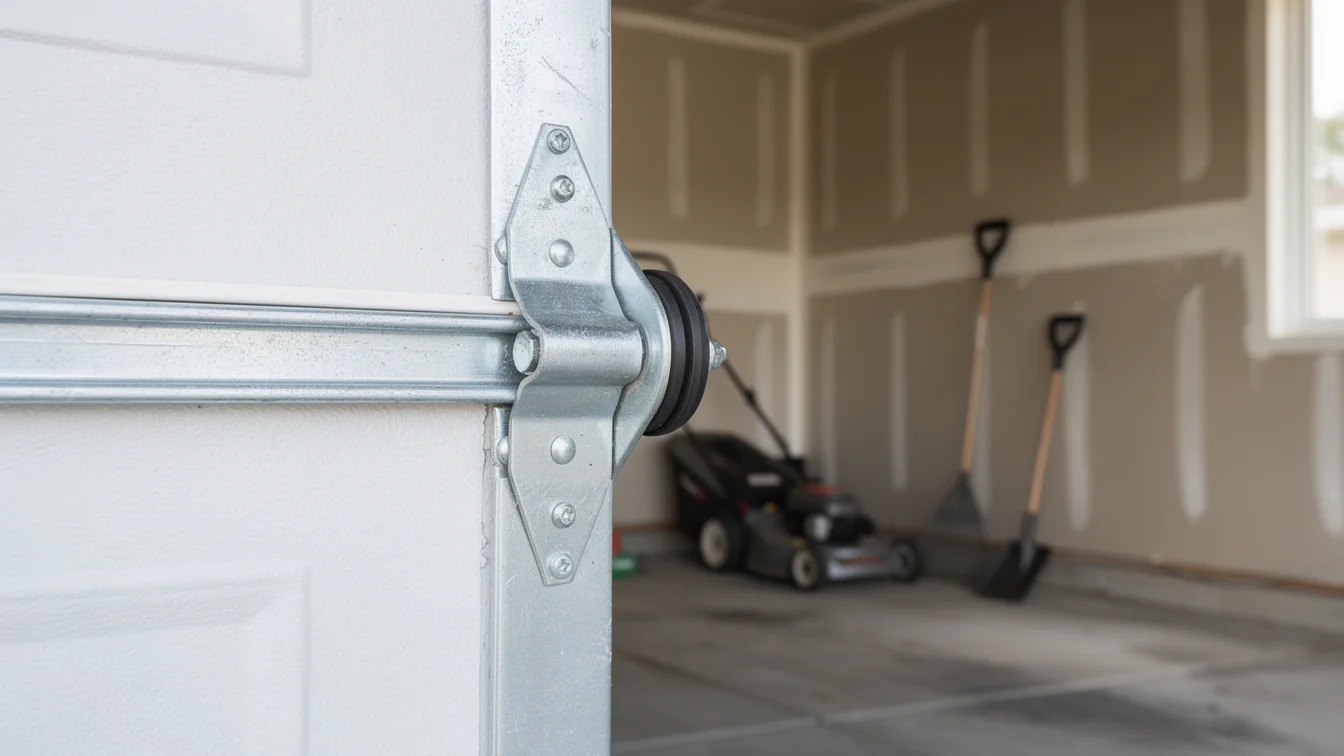
Apple Valley homes built mostly in the 1960s-70s with original hardware and hard winters are the two reasons doors jump track here.
Read more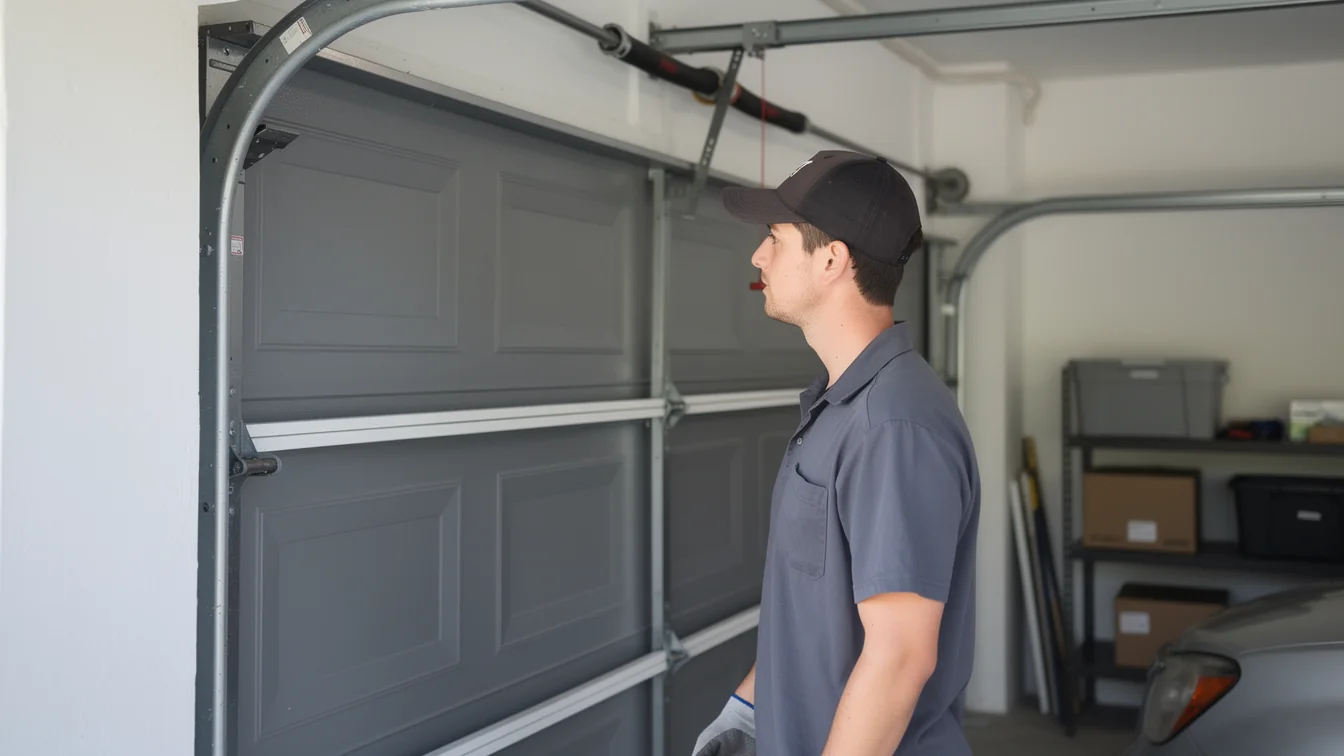
Apple Valley homes built mostly between 1955 and 2004 wear differently in cold Minnesota winters, and each noise your door makes points to a different cause.
Read moreReady when you are
Apple Valley Garage Door Pros repairs and installs garage doors, springs and openers in Apple Valley, MN and the surrounding area.